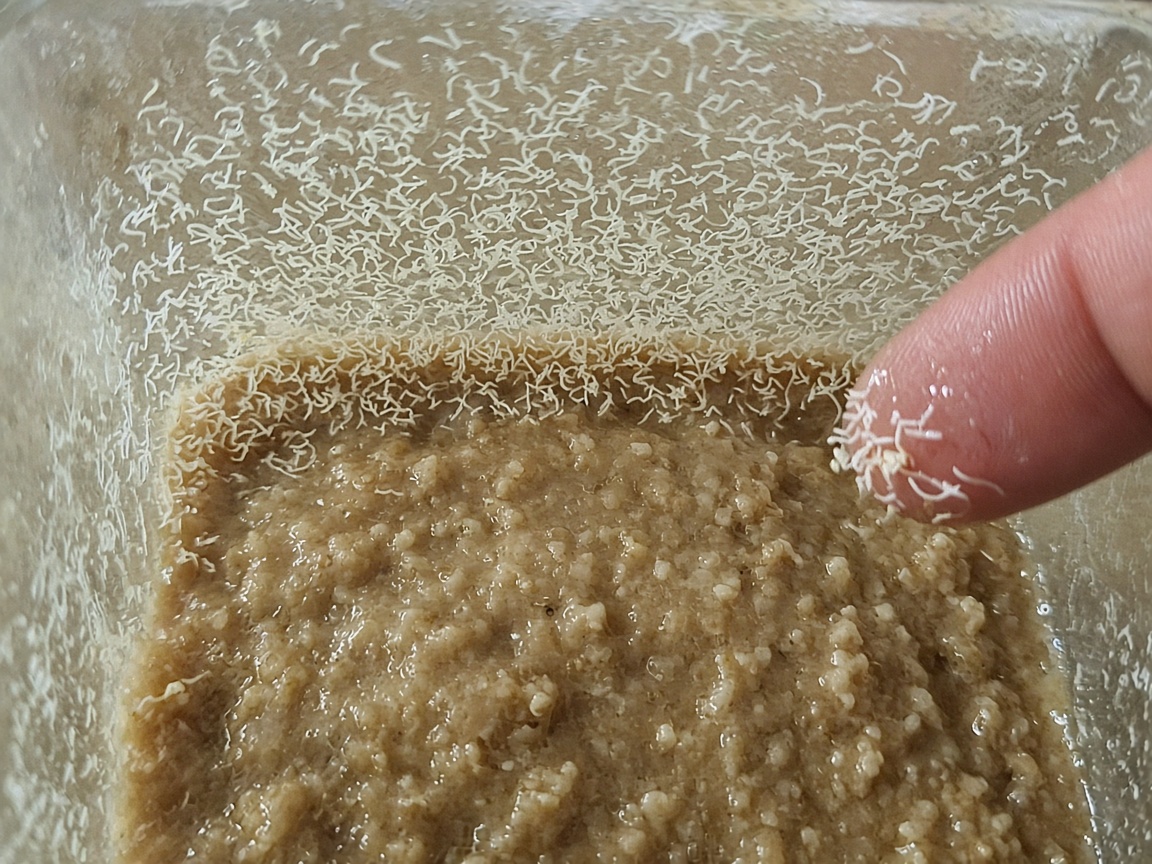
Microworms
In stockPanagrellus redivivus
The go-to first food for betta, gourami, tetra and cory fry
Size±1–3 mm
Culture mediumOats / instant porridge paste
Temperature18–27 °C (room temperature)
DifficultyVery easy
R50 · 15 ml starter culture
Species feeding guide
Honesty first: adult bristlenoses and most plecos are algae-and-wood grazers, and no worm culture replaces that. Where live food earns its tank space in a pleco setup is the fry cave and the breeding tank — bristlenose fry grow faster and survive better with microworms in their first weeks, and conditioning catfish pairs respond to worm feeds like most other fish.
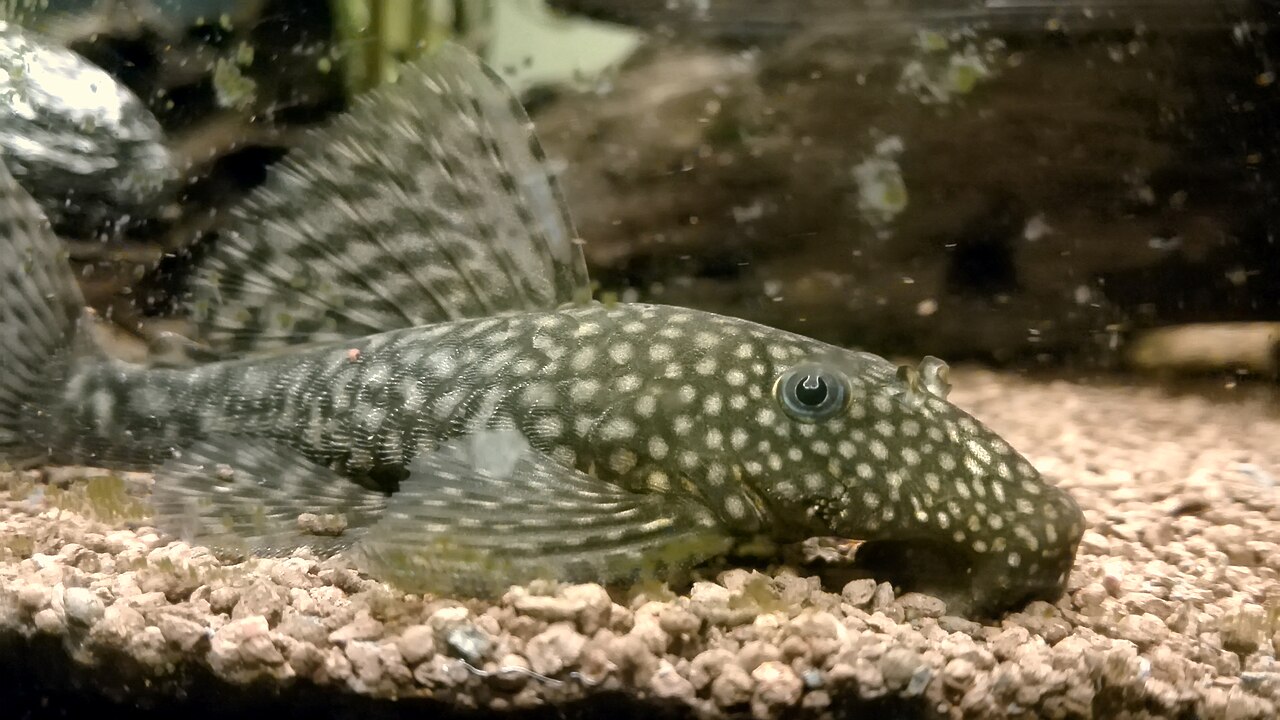
Photo: Júlio Reis, Wikimedia Commons, CC BY-SA 4.0
| Stage | Feed this | Why it works |
|---|---|---|
| Bristlenose fry, first weeks out of the cave | Microworms + soft vegetables | Fry graze constantly; microworms scattered where fry gather add the protein that turns grazers into growers |
| Fry, grow-out | Young grindal worms, daphnia | The protein step-up for juveniles before they go onto a mainly grazing diet |
| Conditioning breeding catfish | Grindal worms and daphnia in rotation | For the smaller L-numbers and Ancistrus pairs, worm feeds in the weeks before a cave spawn improve egg counts and fry vigour |
| Small predatory catfish (pimelodids, talking catfish juveniles) | Blackworms and grindal worms (when in stock) | The true worm-eating catfishes hunt exactly these foods — ask us on WhatsApp if your species is a predator rather than a grazer |
From leaving the cave: soft vegetables and algae to graze, plus microworms for protein in the first weeks. That combination is where the fast, even growth comes from; move to young grindal worms as they size up.
Adults do not — they are grazers. Fry and conditioning breeders genuinely benefit, and the small predatory catfishes (not true plecos) are worm hunters. Match the food to the fish, not the family name.
In stock in the Western Cape, dispatched Monday to Wednesday, door-to-door across South Africa.
Panagrellus redivivus
The go-to first food for betta, gourami, tetra and cory fry
R50 · 15 ml starter culture
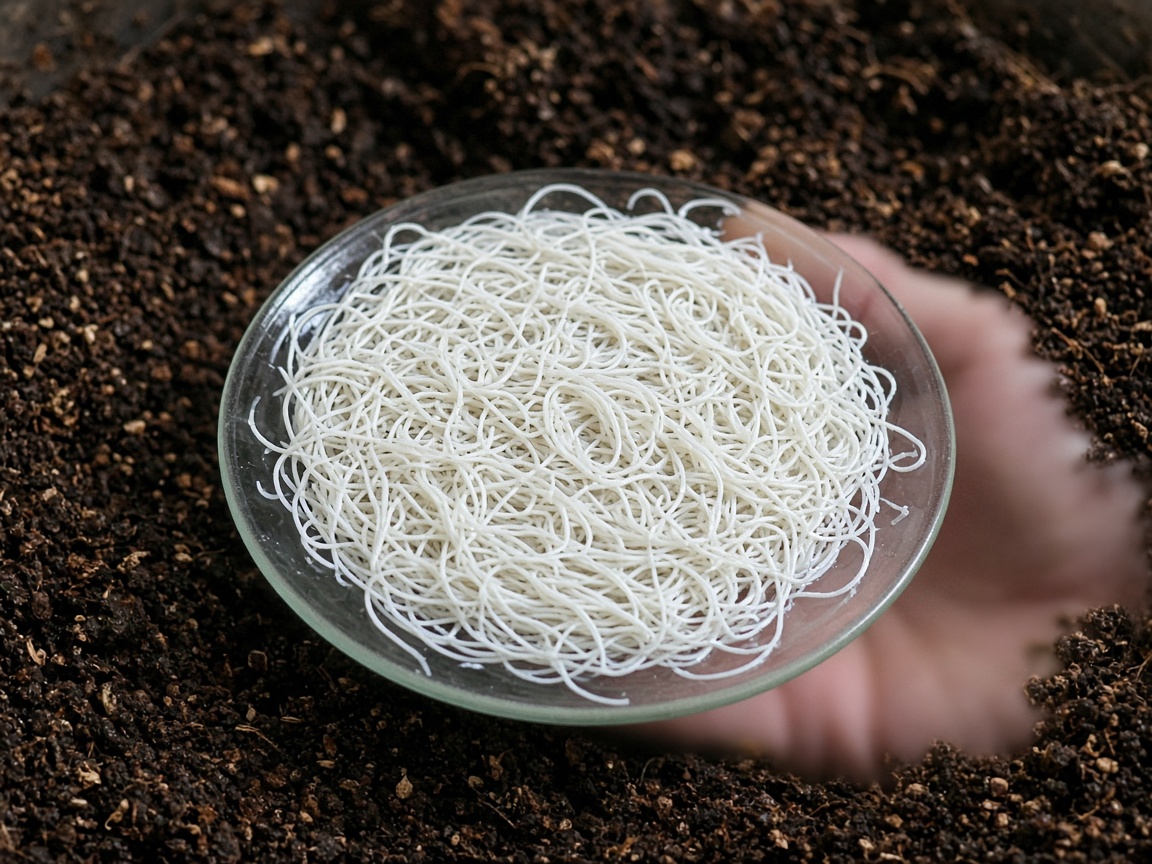
Enchytraeus buchholzi
A bigger, meatier worm for growing-on fry and small adult fish
R50 · starter culture
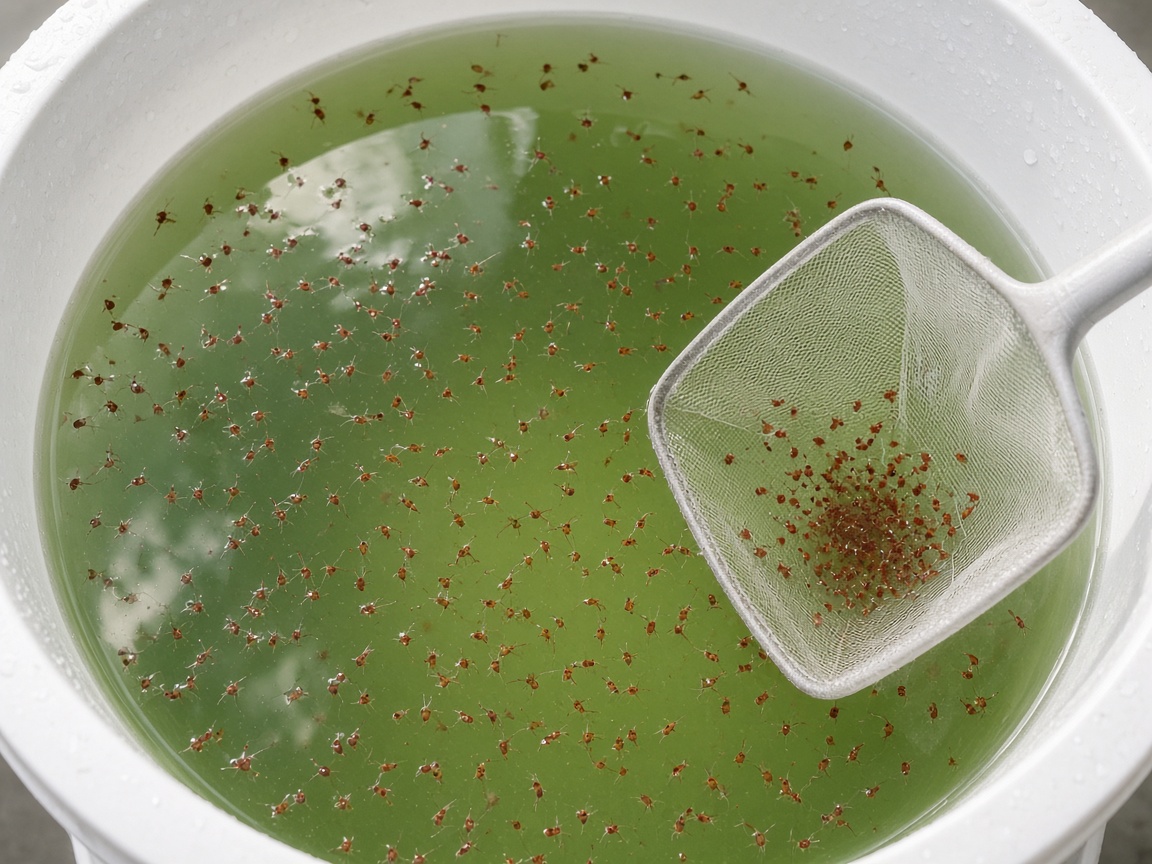
Moina sp.
The small “daphnia” that suits fry and small fish — and breeds fast in warm water
R50 · starter culture
Tell us your setup and town on WhatsApp — we will confirm which cultures you need, what is in stock, and the exact delivered price.
Ask about plecos & other catfish food on WhatsAppLive food for bettas · Food for betta fry · Food for guppy fry · Live food for guppies · All species →