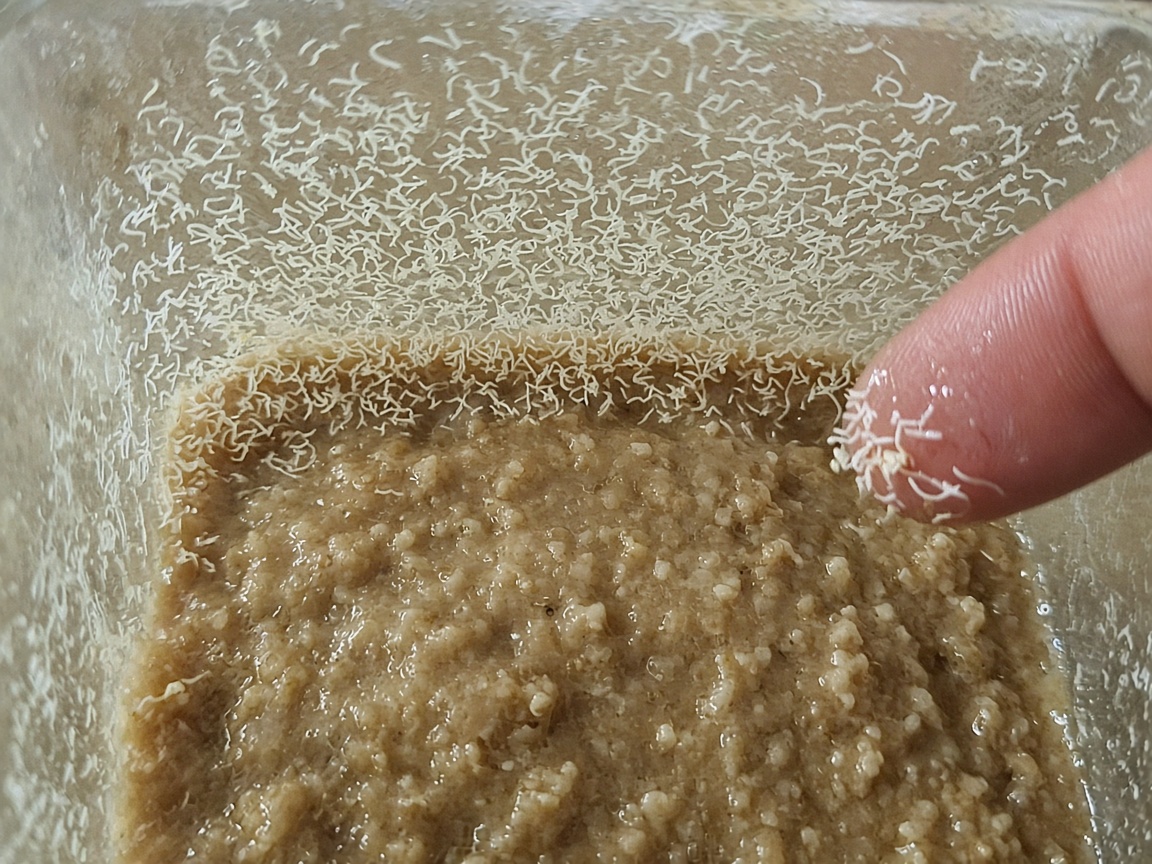
Microworms
In stockPanagrellus redivivus
The go-to first food for betta, gourami, tetra and cory fry
Size±1–3 mm
Culture mediumOats / instant porridge paste
Temperature18–27 °C (room temperature)
DifficultyVery easy
R50 · 15 ml starter culture
Species feeding guide
Shrimp are grazers and scavengers first — but watch a cherry shrimp colony hit a sprinkling of microworms and you will see the other half of their nature: they are opportunistic protein hunters that pick worms off one by one. Used as a supplement rather than a staple, live food is a breeding-condition tool for neocaridina and Caridina alike.
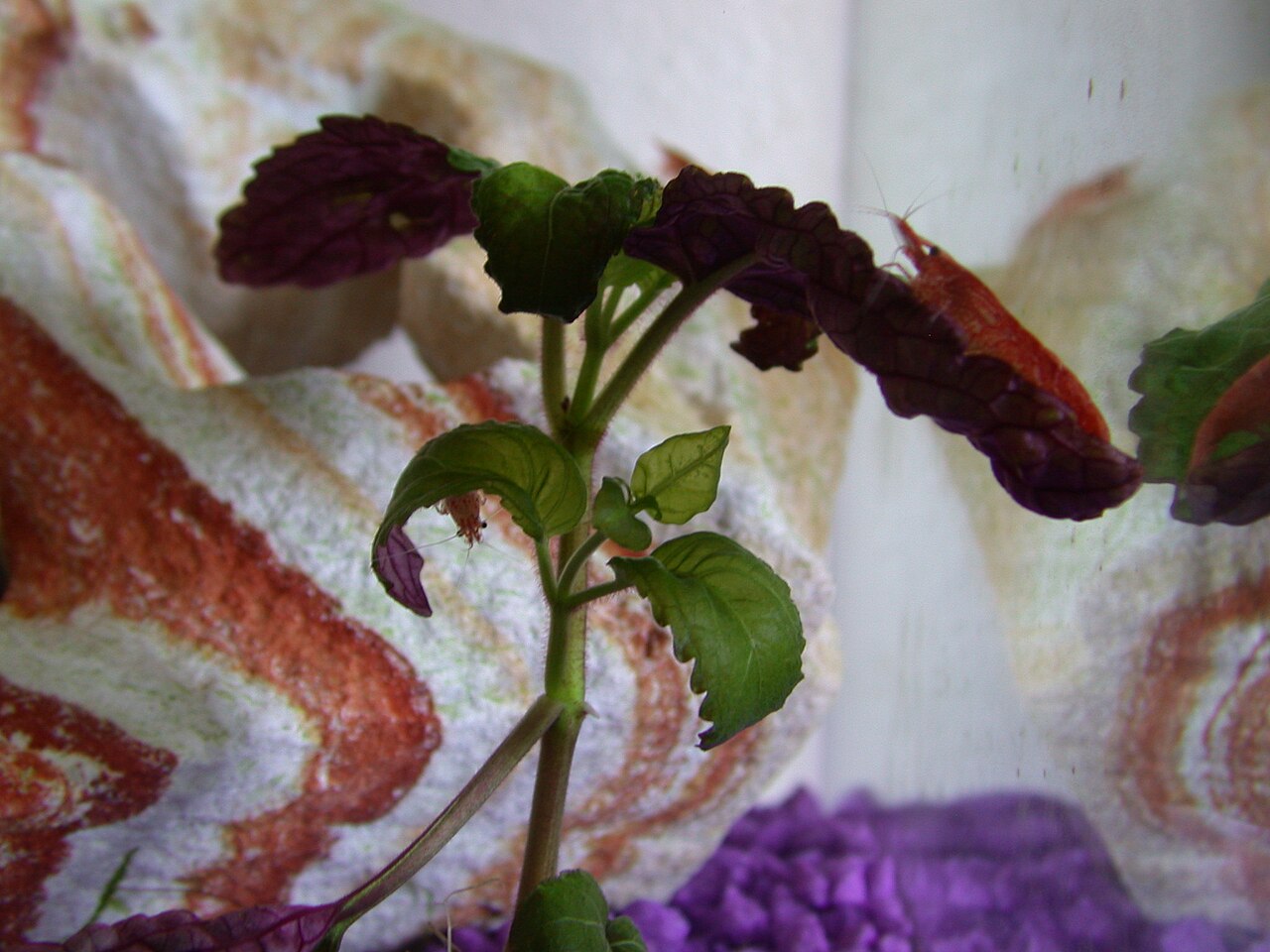
Photo: Dvortygirl, Wikimedia Commons, CC BY-SA 3.0
| Stage | Feed this | Why it works |
|---|---|---|
| Protein supplement, 1–2× a week | Microworms, small sprinkling | Colonies — especially berried females and recovering shrimplets — use the protein; females saddle and berry more consistently on a supplemented diet |
| Shrimp-only tanks | A few live daphnia (moina) | Shrimp pick off dead and tired daphnia and hunt weak ones; in a fish-free shrimp tank a small daphnia presence is both food and clean-up entertainment |
| Shrimplets | Microworm traces + biofilm | New shrimplets graze biofilm first; microworm fallout on the substrate gives the bolder ones an early protein start |
| Before a breeding push | Microworms 2–3× a week for two weeks | The conditioning effect is visible in saddled females within a fortnight in most neocaridina colonies |
Yes — microworms are picked off individually and eagerly, and daphnia is scavenged (and occasionally hunted) in shrimp-only tanks. Think supplement, not staple: once or twice a week in small amounts.
No — daphnia (moina) is harmless to shrimp and shrimplets. In a shrimp-only tank a few may persist and filter-feed alongside the colony; anything that dies becomes shrimp food.
In stock in the Western Cape, dispatched Monday to Wednesday, door-to-door across South Africa.
Panagrellus redivivus
The go-to first food for betta, gourami, tetra and cory fry
R50 · 15 ml starter culture
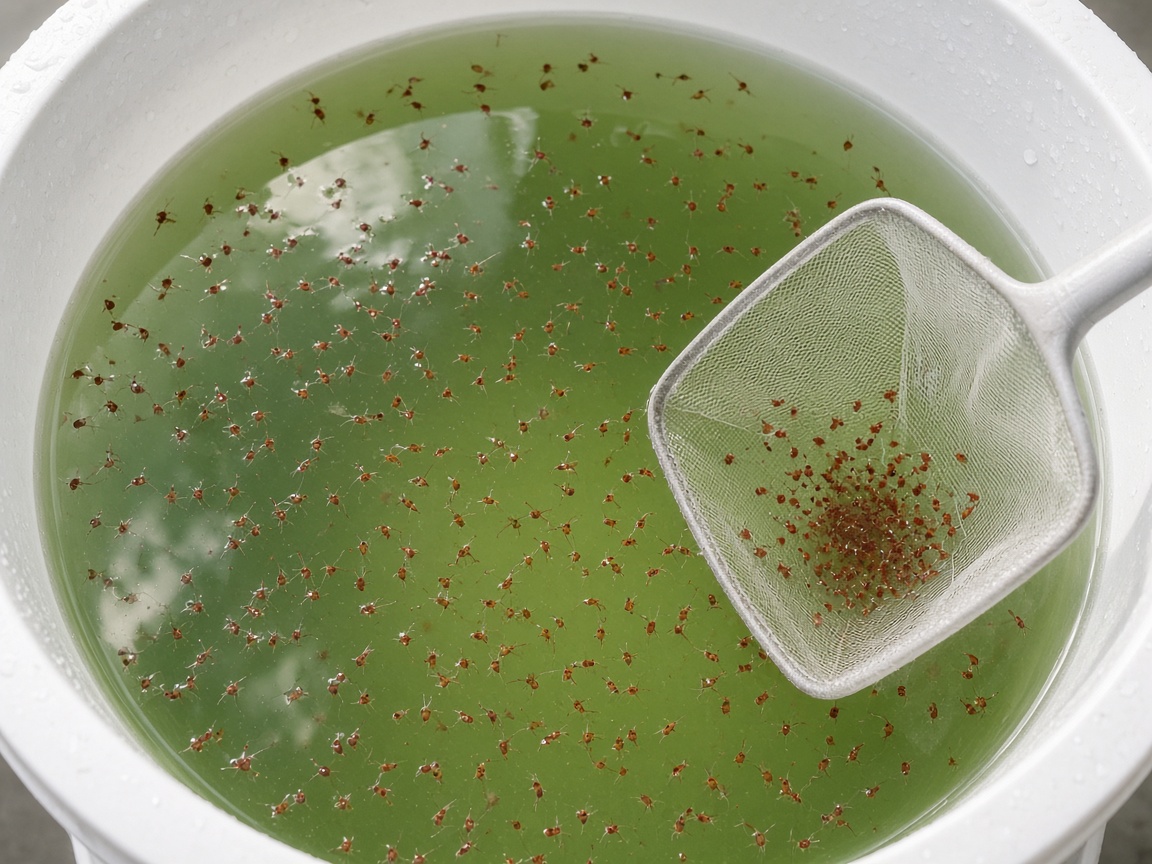
Moina sp.
The small “daphnia” that suits fry and small fish — and breeds fast in warm water
R50 · starter culture
Tell us your setup and town on WhatsApp — we will confirm which cultures you need, what is in stock, and the exact delivered price.
Ask about freshwater shrimp food on WhatsAppLive food for bettas · Food for betta fry · Food for guppy fry · Live food for guppies · All species →