Microworms vs baby brine shrimp: which fry food is actually better?
Somewhere in every breeder’s journey, someone tells them real fry are raised on baby brine shrimp (BBS) and everything else is a compromise. Like most received wisdom it is half true: BBS is an excellent fry food that the hobby clung to partly because, for decades, it was the only small live food you could produce on demand. Microworms (and their cousins banana worms and our oats-cultured vinegar eels) changed the maths. Here is the honest comparison we give customers, including where BBS still wins — we sell worm cultures, not brine eggs, so read our bias accordingly.
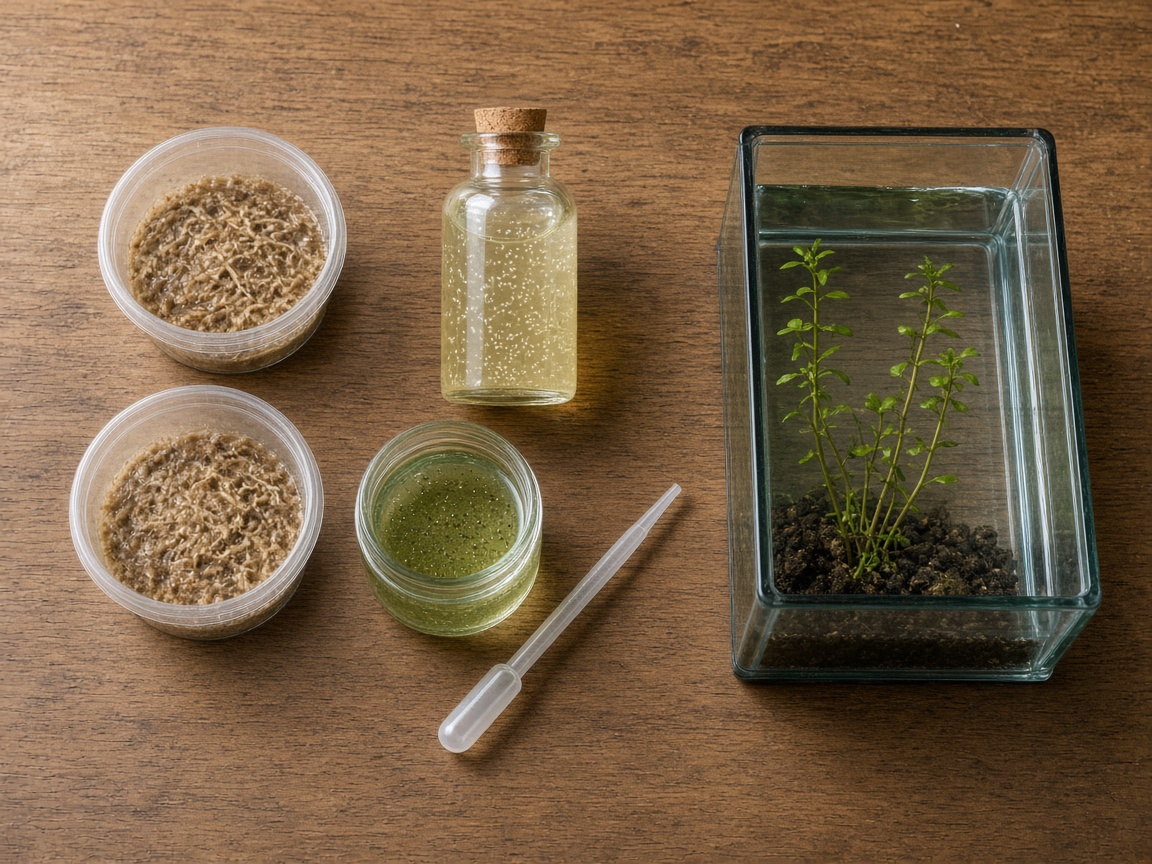
Where baby brine shrimp genuinely wins
- Nutrition out of the shell: freshly hatched BBS with the yolk sac attached is rich food, and it is the growth benchmark for a reason.
- It swims in the water column for hours, in front of fry that hunt mid-water.
- Saltwater-safe: for marine fry there is no worm-culture equivalent at this size.
- Produced on a schedule: set a hatchery today, feed tomorrow — no culture to maintain between spawns.
Where microworms win (and it is a longer list than people expect)
- Size at the bottom end: microworms and especially banana worms and vinegar eels fit fry too small for BBS — betta, gourami, tetra and rainbowfish fry in their first days.
- Cost per feed, by an enormous margin: a tub of oats costs cents and produces for weeks; brine eggs are a per-gram import you buy forever.
- Effort: no hatchery, no salt, no harvesting net, no “the hatch failed” morning. Worms climb the tub wall; you wipe them off.
- Always on: a culture shelf feeds an unplanned spawn tonight. BBS feeds it tomorrow night, if the eggs hatch well.
- Freshwater behaviour: microworms sink slowly and wriggle on the bottom — exactly right for corydoras and other bottom fry that BBS swims away from.
The verdict most breeders land on
Use both, in sequence, if you can: vinegar eels and banana worms for the fry too small for anything else, microworms as the everyday staple, and BBS (if you hatch it) as the growth accelerator for fry big enough to take it, alongside baby daphnia (moina) doing the same job from a tub that never needs re-buying. If you keep only one system — because of cost, space, or sanity — make it the worm cultures: they cover more species, at more sizes, for less money, and they are the reason our Fry Starter Kit exists. The spawns you save are the ones where food was already running when the fry arrived — and a culture is always running.